
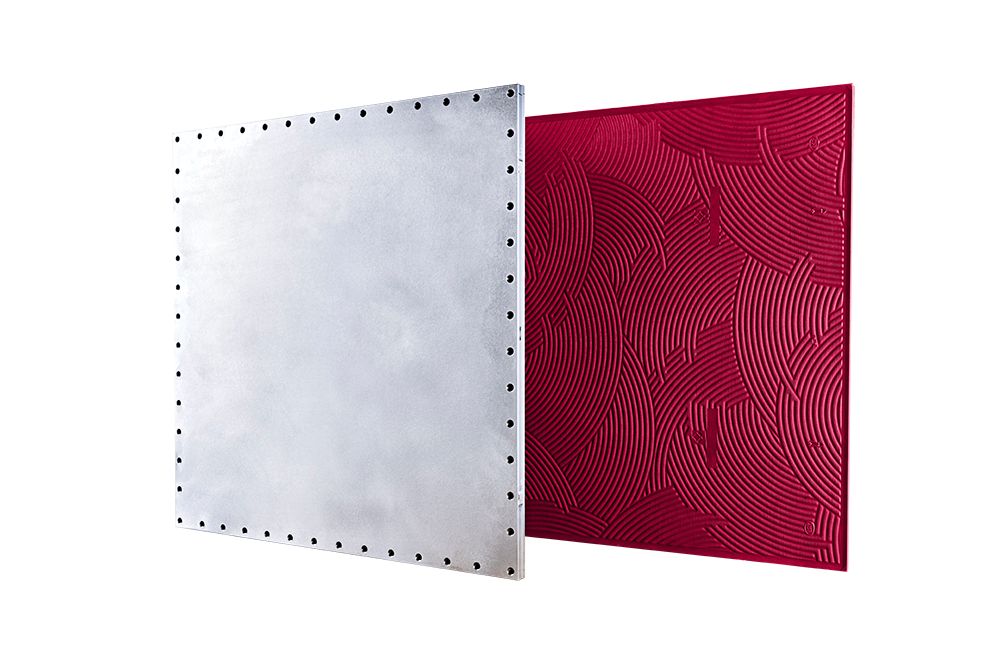
In lappato tiles, surface defects often start at the press: Trebax T-LAP
In lappato tiles, polishing makes visible the small density differences created during pressing. Shading on the surface (often called “transparency”), waviness or thickness differences mean rejects, second-choice tiles and extra sorting work. And when worn punches must be regenerated, sending the mould to a workshop extends downtime in the press department.
The T-LAP isostatic punch from our solution partner Trebax has a modular design that brings the features of the T-EVO punch to lappato production.
Key features of T-LAP
- Three-part “sandwich” design: isostatic base, interchangeable membrane and punch
- The powder has no direct contact with the isostatic chamber; designed against the risk of bursting
- Uniform distribution of pressure across the surface, against transparency, squareness and thickness differences
- Only the punch is renewed during regeneration, and this can be done without a workshop
The right punch and mould depend on the press model, size, thickness, number of cavities and surface type. Trebax isostatic mould and punch options, and the information needed for a quotation, are on our isostatic press moulds page. We bring the solutions of our European technology partners to the press departments of Turkish ceramic manufacturers through a long-term partnership.
Source: Trebax – T-LAP Punch
