
Fujifilm Dimatix StarFire Printhead Cleaning and Testing: SG1024, SG600, Samba

The Fujifilm Dimatix StarFire SG1024 family, with drop size options from XSC to LA, is used in many industrial lines, especially in ceramics. Besides the SA/MA/LA and SC/MC versions for oil-based ceramic inks, there are AQ versions for water-based ceramic inks. Cleanjector works with recipes specific to the model and ink type for StarFire, SG600, Samba and other Dimatix heads.

Supported Fujifilm Dimatix printheads

Main Fujifilm Dimatix models that can be processed with Cleanjector and Inktester Digital:

ModelNozzles
StarFire SG1024/XSC, /XSA1024
StarFire SG1024/SC, /SA, /SA 2C1024
StarFire SG1024/MC1024
StarFire SG1024/MA, /MA 2C1024
StarFire SG1024/LA1024
StarFire SG1024/LA 2Ci1024
StarFire SG1024/AQ MH1024
StarFire SG1024/AQ LH1024
StarFire SG6001536
Samba G3L2048
Samba G5L2048
Polaris PQ-512/15, /35, /85512
Emerald QE-256/30, /80256
Galaxy PH 256/30 HM, /80 HM256

Other supported models: StarFire SG1024/LC, SG1024/HFL, StarFire 600 SA/SC/XSA, Sapphire QS-256, SE/SM/SL-128 AA, Galaxy JA/PH 256 AAA, Nova JA/PH 256/80 AAA.

Technical data from the head manufacturer and People & Technology; the model list may change as it is updated.
Common problems with Fujifilm Dimatix heads

Missing nozzles and lines

Dried or settled ink blocks nozzles, causing lines, colour shifts and missing patterns.

  • Gaps in the nozzle test
  • Jet deviation
  • Reduced drop volume

Ink changeover

When switching to another ink or supplier, residues of the old ink may be incompatible with the new one.

  • Controlled flushing
  • Compatible cleaning fluid
  • Testing after changeover

Long stoppages

Ink drying and pigment settling in the head during maintenance and downtime.

  • Pre-flushing and protection
  • Safe storage
  • Priming before restart

Incorrect cleaning

Pressure above the manufacturer’s limits, unsuitable solvents or cleaning under power can cause permanent damage.

  • Model-specific recipe
  • No power to the head
  • Pressure and vacuum control
Fujifilm Dimatix printhead cleaning Cleanjector
People & Technology

Cleaning Fujifilm Dimatix heads with Cleanjector

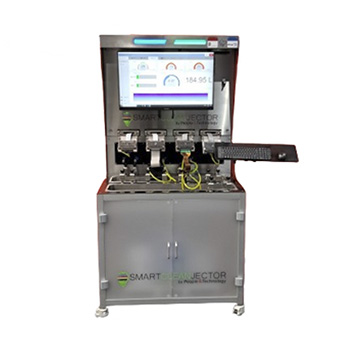
Cleanjector controls pressure, vacuum, flow direction, temperature, time and ultrasound according to the Fujifilm Dimatix head model. Cleaning is carried out with closed-loop filtration and backflush; no power is applied to the head during cleaning.

  • Recipes and adapters specific to Fujifilm Dimatix models
  • Oil, solvent, water-based and UV inks
  • Up to 93% recovery of heads in suitable condition with ceramic inks

Printhead cleaning People & Technology

Fujifilm Dimatix printhead testing Inktester Digital
People & Technology

Measurable results with Inktester Digital

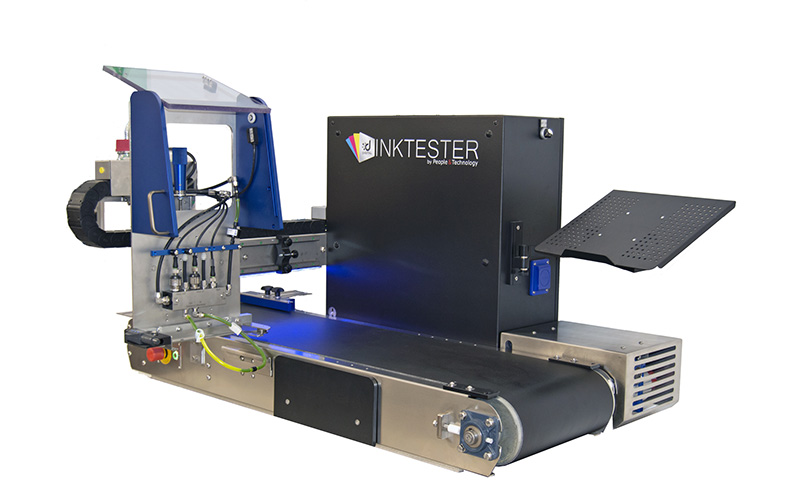
Whether a cleaned Fujifilm Dimatix head is ready to return to the line is tested in the lab without stopping production. The same platform is used for new ink approval and incoming head inspection.

  • Nozzle, drop and waveform checks
  • Before / after cleaning comparison
  • Head lifetime tracking

People & Technology

Frequently asked questions

Can a clogged Fujifilm Dimatix printhead be cleaned?

A significant share of Fujifilm Dimatix heads without electrical or mechanical damage can be returned to production through controlled cleaning with a model-specific recipe. The head condition is verified by testing before and after cleaning.

What should be considered when cleaning Fujifilm Dimatix heads?

The manufacturer’s pressure and temperature limits must not be exceeded, a cleaning fluid compatible with the ink must be used and no power must be applied to the head during cleaning. Cleanjector controls these parameters automatically according to the head model.

How do you know a cleaned Fujifilm Dimatix head is sound?

Inktester Digital checks nozzle condition, drop formation and waveform; comparing results before and after cleaning shows objectively whether the head is ready to return to the line.

Heads running which inks can be cleaned?

Recipes are available for heads running oil-based (including ceramic), solvent-based, water-based and UV inks. The cleaning fluid is selected according to the ink used.

When does a printhead cleaning system pay back?

Payback depends on annual head consumption and the number of heads recovered; in high-consumption plants it drops to around 6–8 months. We calculate it with your head consumption data.

Let’s plan cleaning and testing for your Fujifilm Dimatix heads

Share your head model, ink type and annual head consumption; we will evaluate the right solution and payback together.

Contact us People & Technology