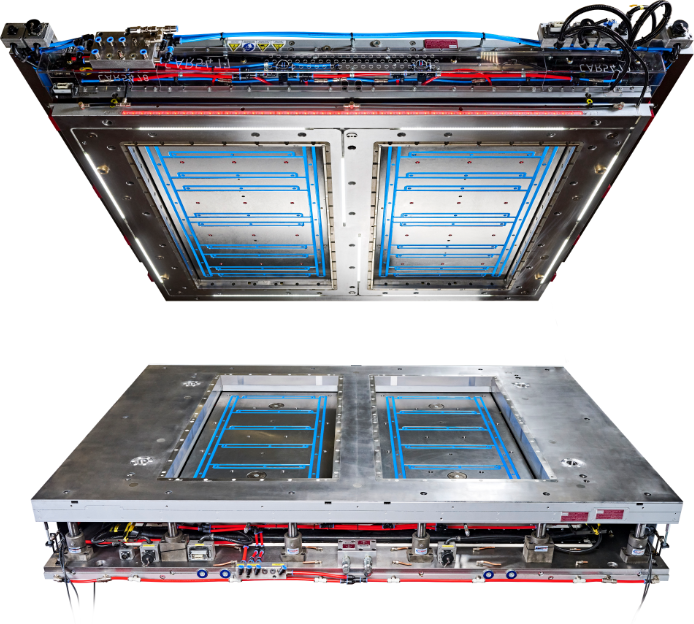
Isostatic Press Moulds and Punches: Trebax Moulds for Ceramic Tile Presses

The same size in every cavity, homogeneous density and fast format changes at the press directly reduce calibre differences, deformation and rejects in the kiln. Isostatic moulds address these issues by distributing pressing pressure evenly over the entire surface. We supply the isostatic moulds, punches and mould automation solutions of Italian mould manufacturer Trebax in Türkiye and work together on mould design and revision.

Mould and punch solutions

Apollo – modular isostatic SFS mould

Single-calibre isostatic technology with a magnetic system; only half matrices are changed for a format change.

  • Different sizes and thicknesses with one mould
  • Fast format change
  • Single calibre

Giove – isostatic SFS mould

Single-calibre isostatic mould with upper forming giving the same size in all cavities.

  • Deep structures
  • Detailed designs
  • Single calibre

Venere – isostatic magnetic plate

Magnetic plate with an integrated isostatic system.

  • Equal pressure in all cavities
  • Homogeneous density
  • Magnetic fixing

T-EVO and T-LAP isostatic punches

Three-part structure of isostatic base, replaceable membrane and punch; T-LAP for lappato production.

  • Only the punch is renewed at regeneration
  • Lappato production
  • Regeneration without workshop (T-LAP)
Apollo isostatic press mould Trebax
Trebax

Mould automation and digital solutions

Green Mould cleans the mould automatically and limits dust during pressing. Speed Up combines magnetic connection, safety sensors and pneumatic lines in a single plug to shorten mould change time. Nexus brings mould, punch and maintenance data of the press department together on one platform.

  • Green Mould: automatic mould cleaning
  • Speed Up: fast mould change
  • Nexus: press department management

Trebax

Design and engineering services

  • Mould design: press mould design and technical drawings.
  • Revision (Trebax Boost): revision and performance improvement of existing moulds.
  • Sizes and specification: dimensions, tolerances and technical specifications.
  • Application engineering: mould selection for your press, product and format plan; supply of standard punches and masks.

Reference installations

Some of the solutions commissioned and running through Ark Trade:

  • T-LAP isostatic punches: NG Kütahya Seramik, Kale Seramik, VitrA

Contact us for a mould assessment →

Frequently asked questions

What is an isostatic press mould?

A mould that distributes pressing pressure evenly over the whole tile surface through a membrane and isostatic system. It compensates for differences in powder filling and provides homogeneous density, reducing calibre differences and deformation in the kiln.

What are the advantages of isostatic moulds?

The same size in all cavities (single calibre), homogeneous density, less calibre sorting and fewer rejects. With modular systems such as Apollo, size and thickness changes are also faster.

What is a punch and why use isostatic punches?

The punch shapes the face or back of the tile in the mould. Isostatic punches distribute pressure evenly; with T-EVO and T-LAP only the punch is renewed at regeneration, lowering maintenance cost.

Can our existing moulds be revised?

Yes. Existing moulds can be revised and improved with Trebax Boost; we prepare dimensions and specifications together.

What information is needed for a mould quotation?

Press brand and model, tile size and thickness, number of cavities, surface type (matt, lappato, structured), current mould details and problems experienced.

Let’s define the right mould for your presses

Share your press and product details; we will get back to you with technical catalogue information and a quotation.

Contact us Trebax